Showing posts with label wildlife. Show all posts

Wednesday, July 01, 2009

Moremi Game Reserve Safari

Here we have two of our Afro Trek Safari Guides - Shylock in the middle and Kabelo 'KB' Kgafela on the far left with three Norwegian visitors. They did a three day safari around Moremi Game Reserve to end off the month of June. The game was plentiful, the food excellent and the company wonderful.

With the new season getting into full swing, Afro Trek is bringing two new Land Cruisers on stream. Book early to get the dates and camps that you want. Whether it's three days or six - a safaris trip of a lifetime can be organized for you.

Sunday, May 11, 2008

Sunday, May 04, 2008

Maun Safari - African Wild Dogs - After a Kill

African Wild Dog click for Wikipedia article.

It is late April and I am on a game drive with Alan and two friends from Italy - Gracia and Massimo. When we left Sedia Hotel at 7:00 am it was chilly. Approaching Moremi Game Reserve, we are just starting to warm up and thinking about some breakfast. Joe, are safari guide, starts to slow down our safari vehicle. For the next 10 minutes we have an extraordinary sighting of eighteen Wild Dogs - resting after a morning kill. Wild Dogs are seldom found in Reserves because they require such a large area within which to hunt.

It was a wonderful start to an exceptional day of game viewing. Elephants were plentiful, Joe found a pride of lions with three cubs - impala, kudo, girrafe, water buck and cape buffalo were spotted. We had a great lunch of chicken and tender beef roast, complete with salad and fruit for dessert. Seven or eight hippos provided the midday entertainment, complete with their occasional base booming sounds.
The day would not be complete without mentioning the birdlife - hornbills, egrets and a great white heron - who watched us eat most of our lunch. Vultures were in the trees around some kill we couldn't get to see. While looking at the lions Alan identified a Pels Owl call, which was unusual considering the time of day. All and all - quite an eyeful and earful.

Tuesday, January 15, 2008

Moremi Game Reserve - Rainy Season

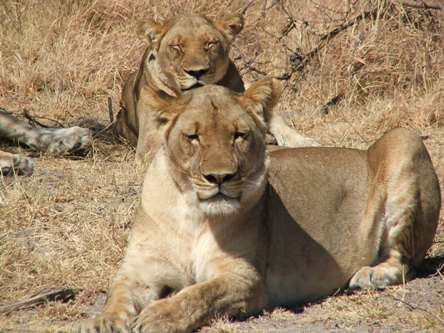
Lioneses Resting With Carcass - Paradise Pools, Moremi


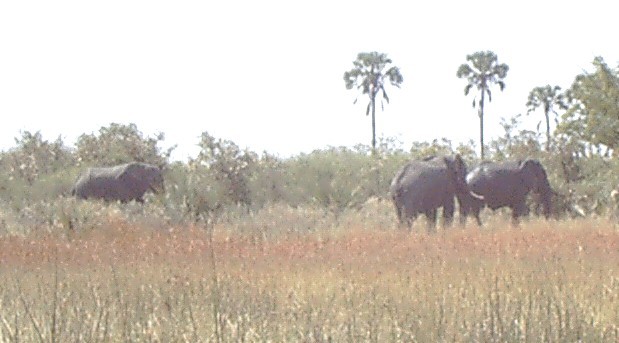
Elephant Enjoying Mud Bath


Early January brought some friends from Canada for a visit to Maun. One of the things we did was a mobile safari with Shylock Raborokwe, into Moremi Game Reserve. The video above shows a huge male elephant enjoying a very wet mudhole. We saw pleny of game - hippos, kudu, impala, wildabeasts, sable, dudiker, crocs, saddlebacked storks, spur winged geese, lions....


Moremi is very wet this year. Northern Botswana is having a heavy rainy season - most places already have over 300mm and some are over 400mm. With 6 to 8 weeks still to go for prime rain times, it could be well above our average rain fall of 460mm.


Sunday, December 02, 2007

Shylock Captures Lion In Moremi Game Reserve


Guests from Windhoek had two very special days with Shylock Raborokgwe. On day 1 they went on a mokoro trip in the Okavango Delta and ended the day with a game flight. On day 2 Shylock took his guests on a day trip mobile safari in Moremi Game Reserve. They saw plenty of game - elephants, kudu, impala, hippo....

The highlight of the trip was a lion sighting. No only did the safari guests get some great photos, but there was enough time for Shylock to get a couple of photos of his own. Tautona is the name given the dominant male lion in a pride or area. I think that is what we are looking at in the picture. If I had been there, I would have been listening for the lion roar. For us, Shylock is the 'Tautona Safari Guide. '

Regardless, these guests had two days they will never forget. What a way to spend a weekend or two spare days in your busy schedule. Give it some thought - see the Okavango Delta by air, water and safari vehicle.

Monday, October 01, 2007

Fish Eagle - Take Away Dinner

Done in split seconds! Here we have the Fish Eagle - high priest of the Okavango River, getting his lunch. At this time of year, September-October, the water is so clear and it is hard to see a missed catch.

Notice the way it corrects its flight pattern after catching the fish. Then it goes back to a favourite tree or nest and has lunch. Fish Eagles can fly away with fish up to 4 pounds. If it can't fly, it will drag the fish along the surface of the river until it reaches the far shore. I have yet to see that happen.

Friday, August 10, 2007

Maun Safari - Game Flight Or Game Drive


Game Flight or Game Drive?

Let’s assume you have just arrived in Maun, Botswana and you have to plan your activity for the next day. If you have to choose between either doing a game flight or going on a day game drive to Moremi Game Reserve, what should you consider?

The game flight only takes about an hour. It leaves you plenty of time during the next day to rest, shop or catch up on some writing or reading. Mainly the participants seem to remember seeing herds of elephant or cape buffalo. Flying in a small Piper Cub is fun and if you are like me, you see the ground as a real life map.

On the other hand, a game drive starts early in the morning and is a full day activity. The potential to get close to lions, leopards, elephant, giraffe, hippo, wildebeest and a bounty of bird life are reasonably high. The packed lunch and chance for a short midday rest never disappoint.

If getting close to nature in a world renowned game reserve is your idea of fun, then the game drive is for you. If you need a rest and prefer a unique aerial perspective of the Delta, then go for the game flight.

Friday, June 08, 2007

Pelicans Cover Maun Skies


Pelicans In Formation Over Maun


Late afternoon the banks of the Thamalakane River can be covered with hundreds of Pelicans coming together for a night of rest. During the days you can now often look up and see squadrons of Pelicans circling over Maun. On good days, with plenty of wind, they are up in the sky playing with the thermals - dipping and diving, regrouping and doing the process over and over again.


With the new flood about to arrive in Maun, it can only be hoped they will stay with us for a while longer. It remind's me again of the old ditty Kelly would recite when we were on safari together:


"A funny old bird is the pelican.
His beak can hold more than his belly can.
He can hold in his beak
Enough food for a week,
And I don't know how in the world he manages to do it!"
On days like this, it makes you wonder - should the Pelican be the National Bird of Botswana. For another perspective of the Pelicans in Maun - click here.

Friday, May 04, 2007

Moremi Gami Reserve - 1st Amongst Equals


Moremi Game Reserve

Moremi is often described as the most beautiful of all wildlife sanctuaries in Africa, covering almost a third of the entire Okavango Delta. It is a diverse habitat where the desert and delta meet - an area made up of floodplains, pans, lagoons, channels, woodlands and forests.

In 1963, the wife of the late Batawana Chief, Moremi the Third, developed the Moremi Game Reserve in his honour. It it was the first wildlife reserve to be set aside in southern Africa voluntarily, by an African community on their own land. In 1970, the Chief's royal hunting grounds, Chief's Island was added with a further area to the northeast in 1991.

The Reserve is a haven to wide variety of wildlife and many water dependant animals. Birdlife is prolific and also varied, ranging from water birds to shy forest dwellers. Elephants are numerous, particularly in the dry season, as well as a range of other wildlife species from buffalo, giraffe, lion, leopard, cheetah, wild dog, hyena, jackal and the full range of antelope, large and small including the Red Lechwe.

Moremi Game Reserve is best visited in the dry season, game viewing is at its peak from June to October, when the pans have dried up. The winter months of May to August can be very cold at night and early mornings, but pleasantly warm during the day. From October until the rains break in late November or early December, the weather can be very hot, with temperatures regularly topping 40 Celsius (105 Far.) in the day.

Saturday, April 07, 2007

Maun Safari - Safari Lion Kill


Afternoon Safari Drive Story


The following story was developed over a three week period at my Maun - Gateway to the Okavango Delta Wetlands site. Imagine a variation of it being told around the campfire as you return to camp.


"Look - over there - in the tall grass - 2 female lions! And behind them - on the malapo - a herd of sable. Let's just see what happens... if we are patient enough, perhaps a kill. Look - Quelas, by the thousands - flying in tight formation, like they are all one big body. Amazing how they can dip and dive - they have all disappeared into that tree.


This could be it, one of the lions is moving into the mopane trees - it is circling around toward the sable herd... Perhaps we should move the vehicle more out onto the malapo to see what's happening - not far enough we disturb the dozen or so sable slowly grazing toward the woods. Soon the sable will enter into the woodland themselve. My God - look!


The lion is charging out of the woods, straight into the herd of sable. The sable are in panic - turning and trying to scatter - they are coming straight at us. On of the sable clips the back corner of our vehicle as it flees past us back out onto the malapo. Confusion reigns are the lionese continues to charge. She has picked out her prey, a pregnant sable.


With lightning speed she closes down her prey and leaps onto her shoulders. The weight of the lion and the resistance given by her back legs stop the fleeing sable just 5 metres from our vehicle. The second lionese is now sprightly making her way to the scene of the evolving kill. In quick order the sable is now flipped on her side. She awaits her fate with a stoic dignity.


The first lionese continues her grip on the sables should/neck until she is dead - it seems to take forever - perhaps 5 or 6 minutes. The other lionese starts at the other end and work toward the inards. Dinner is served. Who would have guessed it would arrive so suddenly. It is time to start making our way towards camp and think about our own supper. Perhaps we should come back in the morning and have a final look around. How about passing by the river on the way home - elephants may be having an end of day swim and drink?


My, my, we are lucky today - a herd of about 30 elephants coming down, just as we arrive.Ah, one of life's little pleasures - to see an elephant, after a long dry walk, makes it's run for freaf, clean river water. The gait seems to have a spring, the head and nose start to bob up and down more than usual - you can almost see it grinning as it runs staright into the water. Only the baby elephants seem to have some difficulties - trying to figure out what to do with their long noses as they try and run towards the river.


After watching them play in the water for 20 minutes - pushing there mates under water and spraying each other with water, it is getting late and time to go. We enjoy an emence African sun set and twilight. We arrive back in camp. A glowing campfire and a round of refreshing drinks are waiting for us. Now we can really talk about the safari."

Saturday, February 24, 2007

Afro Trek Safaris To Chobe


Chobe National Park

Chobe National Park is divided into four main focal points. The Chobe Riverfront with floodplains and teak forests; Savute Marsh in the South West; the Linyanti Swamps in the North West and the hot, dry hinterland in between.

The Chobe National Park covers 10,000 sq. km., which is about 4,000 sq. metres and one of the major features is the elephant population. The Chobe elephant comprise part of what is probably the largest surviving continuous elephant population, which covers most of northern Botswana plus northwestern Zimbabwe and is estimated to be well over 100,000 strong. The Chobe elephants are migratory making seasonal movements of up to 200 km. from the Chobe and Linyanti river systems, where they concentrate in the dry seasons.

Game viewing is at its best during the dry months of May through to September, when the majority of natural pans have dried up and the game concentrates around the permanent water sources. Most wildlife activity occurs along the banks of the Chobe River. Hippos bathe, crocodiles sun themselves and wildebeest, zebra and buffalo gambol freely.

The buffalo herds are invariably accompanied by attendant lions, which can result in, the much sought after viewing of a lion kill. Sadly, such a sight in Chobe these days may have to be shared with many other tourists in game viewing vehicles (most of these vehicles now fitted with radios for communication with each other), gridlock could be experienced. However, maybe the awe of the spectacle outweighs any distraction from other game viewing vehicles in the immediate vicinity, some may not agree.

Many baboons and the elusive Chobe bushbuck can be spotted along the riverbank. Not to be missed by party animals is the afternoon boat9or booze) cruises available from most of the riverside lodges in Kasane. The Chobe riverfront offers beautiful scenery and stunning, dramatic sunsets.

Wednesday, February 14, 2007

Best Time to Safari in Botswana

The Best of Times - Botswana

Each period of the year offers different highlights, though May through to October / November are the months offering the best general wildlife viewing opportunities. The drier months result in better game viewing as the animals are forced to visit the fewer remaining water holes and pans in order to drink each day.

The predators merely have to wait at these water sources, being fewer in the drier months and therefore more crowded, for the animals to approach and commence drinking. For the wildlife enthusiast with limited time to spend, the period June to November is the wisest choice of times to go on safari in the Okavango Delta or Moremi Game Reserve.

In May, the flood waters from Angola are still making their slow and deliberate progress through the Okavango Delta. The rains have now ended, the nights are significantly cooler with temperatures averaging around 15 Celsius (60 Far) and day temperatures peaking at just over 30 Celsius (90 Far).

Breeding herds of elephant increase in density as they visit the perennial rivers of the Okavango, Chobe and Kwando. The seasonal pans begin to dry up. The lush greens, so evident in the wet season, begin to fade quickly into the duller dry season colours, allowing the predators to take full advantage of the fact that their coats now blend in with their surroundings again. The migrating birds commence their annual flights to winter feeding and breeding grounds in distant lands.

In June, temperatures reach their lowest, night temperatures towards the months end can drop to below zero (32 Far) but day temperatures still hit around 30Celsius (75 Far ) . Dry and dusty conditions now dominate with pans and water holes now resulting in the animals drinking at permanent water sources, closely followed by the predators

However, the wet months of December through to March offer other spectacular highlights which should not be overlooked. Obviously the vegetation at this time of year is rich with lush green growth evident everywhere.

Many of the antelope family have young ones during this period to take advantage of these nutritious grasses for grazing. This again offers predators rich pickings - these very young antelopes being easy prey for lion, cheetah, leopard or wild dog. For the birding enthusiasts the wet months can be a delight with many males of the various species displaying their full breeding plumage.

Monday, January 22, 2007

Afro Trek Safety Briefing #2

Safari Briefing – Safety 2

The open safari vehicle does provide a surprising degree of protection. You will be amazed at how close you can get to a lion. Your safari guide will try to get the best setting for your photos and videos. You only leave the vehicle with your guides’ permission.

Predators like lion and hyena are always a concern. Too many accidents happen because the big animals are territorial or protecting their young. Hippos are the most dangerous. They can change from grazing to charge mode surprisingly quickly. Cape Buffalo can be very skittish and mean spirited.

Listen to you guides’ guidance. Also, listen to his stories around the campfire at night. The information can save your life.

Monday, November 20, 2006

Maun Safari Flashback

Birdwatching With Kelly Revisited

I received an email over the weekend from Hugh Kelly. He is thinking about bringing some family members to Maun and taking them on safari. It was fun to think back to the trip we did 6 months ago. Along with his reflections on our safari, Kelly also provided a more complete version of his pelican ditty:

'Regarding pelicans - funny old birds, as discussed around the campfire
after a few shots of Bells.'

" A funny old bird is the Pelican
His beak can hold more than his belly can
He fills up his beak
With enough food for a week
But I'm sure I don't know how the hell he can"

Sunday, October 22, 2006

Wildlife Magic on Safari, Botswana

Trevor Peake Enjoys A Trip To Botswana, Part 1

From the pages of the Liverpool, Daily Post in Trevors own words -
"Hundreds of buffalo leisurely grazing their way across the savannah as dusk fell will be my abiding memory of a few days in the Moremi Game Reserve, part of the vast Okavango Delta, in northern Botswana."

"Our guide Shylock spotted what we thought was just a small group, but after expertly circling round through the bush he found the front of what turned out to be a vast herd of Cape Buffalo. We could only watch in wonder for over half an hour as they strolled by, the odd magnificent bull giving us the once over as we observed them from the safety of our safari truck 30 yards away."

"An hour earlier, we had been even closer to a male lion, which showed the scars of a recent skirmish. Such splendid sights are what makes a safari the magical experience it is.:

Wednesday, August 30, 2006

Botswana National Bird?


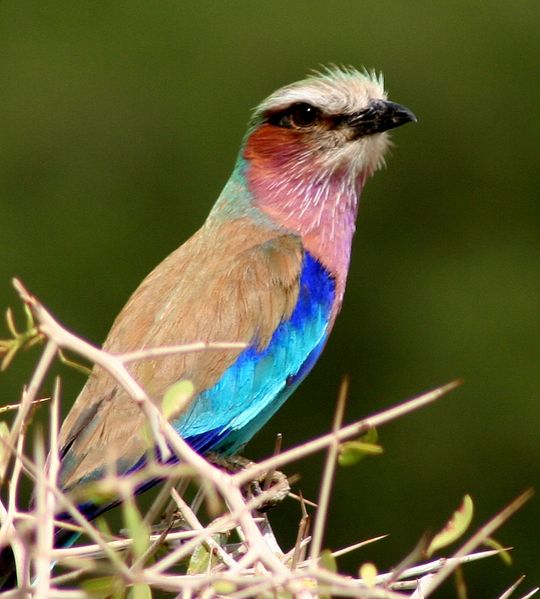
In an earlier blog I mentioned that the Lilac Breasted Roller was the national bird of Botswana. A member of Birdlife Botswana has commented that Botswana does not have a national bird. I defer to his far more knowledgeable perspective and would like to set the record straight.


I was talking about the lilac breasted roller this week with a local guide and he expressed surprise. In the end we recognized it may be one of the great bird mysteries of Botswana. Where did the misconception start? Perhaps the lilac breasted roller should be made the national bird of Botswana and take it's place proudly alongside the zebra. It would look good on the coat of arms for Botswana.


You are encouraged to click on the Birdlife Botswana link above to find out what is happening with birds in Botswana. To go to the source of the photo please click here. I am so slow with a camera it would take me forever to get a photo of this beautiful bird.

Sunday, August 20, 2006

Maun and 'The Gates of Eden'


Sunday morning, my friend Ernest and I start out from Sedia Riverside Hotel on a trip up the Boro River and into Moremi Wildlife Reserve. To get from the Thamalakane River to the Boro you have to travel under two bridges - the water levels are now high enough to navigate all the way upstream by boat. Like Jacques Cousteau, alot of our outing is about research is about water.

The current is pushing downstream and the flood peak could still be a month away. Going up the Bore to the buffalo fence is about 12 km. You see domestic animals, birds and a variety of farming and garden plots along the river. The buffalo fence is the boundary of the Moremi Wildlife Reserve. Here, everything changes.

Now you enter the 'Gates of Eden' or as close as I am going to get in this lifetime. You don't go too many kilometres before you see wildlife. You feel like you are on a wet safari - cape buffalo, giraffe and elephants are not uncommon. The narrow river channel arcs and bends in front of you. The panorama is wonderful.

Today we spend about half an hour watching elephants have their morning bath and eat brunch. Their brunch is a combination of river grasses and stripping branches from bushes. We have our lunch at a lagoon futher up stream and try some fishing. The lunch was satisfying and the fishing disappointing. Changing lures, adding small chunks of ham and even spitting on the lures didn't work. Fishing stories will have to wait for another trip