Fantastic article by a guide who considers the Okavango Delta his office. Travel well Kabelo Ras Kunta Kgafela
Posted by Afro Trek Safaris on Wednesday, 2 March 2016
Showing posts with label maun_travel. Show all posts
Showing posts with label maun_travel. Show all posts
Thursday, March 03, 2016
Okavango Delta - Termites Role


Wednesday, July 01, 2009
Moremi Game Reserve Safari
 Here we have two of our Afro Trek Safari Guides - Shylock in the middle and Kabelo 'KB' Kgafela on the far left with three Norwegian visitors. They did a three day safari around Moremi Game Reserve to end off the month of June. The game was plentiful, the food excellent and the company wonderful.
With the new season getting into full swing, Afro Trek is bringing two new Land Cruisers on stream. Book early to get the dates and camps that you want. Whether it's three days or six - a safaris trip of a lifetime can be organized for you.
Thursday, April 05, 2007
Okavango Delta Flooding
Okavango Delta - Wetlands Getting Wetter
Travellers from around the world are following, with growing interest, the strong floods pouring into the Okavango Delta. A post in the Maun, Botswana Blog about the flow rates at Mohembo is creating worldwide interest. Click on the above link to follow the developing story.
What has started as a strong annual flood with flow rates of over 400 cubic metres per second, has spike over 200 cubes in just 10 days. Kasane is experiencing wide ranging flooding as we speak and it is very possible a similiar situation is developing in the Okavango Delta. A new flow rate chart will be out after April 10th.
Travellers from around the world are following, with growing interest, the strong floods pouring into the Okavango Delta. A post in the Maun, Botswana Blog about the flow rates at Mohembo is creating worldwide interest. Click on the above link to follow the developing story.
What has started as a strong annual flood with flow rates of over 400 cubic metres per second, has spike over 200 cubes in just 10 days. Kasane is experiencing wide ranging flooding as we speak and it is very possible a similiar situation is developing in the Okavango Delta. A new flow rate chart will be out after April 10th.
Tuesday, March 20, 2007
Dancing With Elephants - Nxai Pan

Nxai Pan - Bull Elephant Hangout
Nxai Pan is worth visiting 12 months a year. Located about 180 km. or three hours from Maun, the safari expedition can be done in one day, however it is best done overnight. The camps are in very good shape. Expect to hear lions and maybe be visited by elephants. Actually, we were visited by an elephant around 3 in the morning. It was sniffing around our vehicles and tents - quite a sniff, quit a sniffer! The camp site has running water and the elephant was looking for a way to liberate it - an old elephant activity.
Animals are busiest during the rainy season. By mid March the last water hole is being fed by underground pipes. The females and their young have left the bulls behind, so they can stand around the water hole and brag about last season. Springbok are plentiful, with a sprinkling of black back jackel, impala and gemsbok. The secretary bird seems to show up frequently, always on it's own.
Saturday, March 10, 2007
Safari in Savute
Savute
Savute, lying in the west of Chobe National Park about 50km north of Mababe Gate, attracts dense concentrations of game during the wet season, which normally starts in late November.
The shallow Savute Channel, connecting the river to the north with the Mababe Depression, which was once a great lake, seems devoid of life. So to, Savute Marsh, situated at the junction of the Savute Channel and the Mababe Depression, dry for most of the year and best described as a treeless flatland.
Until, however, the rains break, then the game arrives, in their thousands, taking advantage of the new rich grasses. Wildebeast, giraffe, tsesebe, and huge herds of zebra, together with elephants and buffalo making up the variety of animals to be seen.
This massive influx of game also attracts predators, in the form of lion, leopard, cheetah, wild dog and hyenas. Savute is world famous for the carnivores, especially the lion prides that are resident here. Savute is also well known for the bull elephants that roam through this area.
Savute, lying in the west of Chobe National Park about 50km north of Mababe Gate, attracts dense concentrations of game during the wet season, which normally starts in late November.
The shallow Savute Channel, connecting the river to the north with the Mababe Depression, which was once a great lake, seems devoid of life. So to, Savute Marsh, situated at the junction of the Savute Channel and the Mababe Depression, dry for most of the year and best described as a treeless flatland.
Until, however, the rains break, then the game arrives, in their thousands, taking advantage of the new rich grasses. Wildebeast, giraffe, tsesebe, and huge herds of zebra, together with elephants and buffalo making up the variety of animals to be seen.
This massive influx of game also attracts predators, in the form of lion, leopard, cheetah, wild dog and hyenas. Savute is world famous for the carnivores, especially the lion prides that are resident here. Savute is also well known for the bull elephants that roam through this area.
Sunday, March 04, 2007


Wednesday, February 14, 2007
Best Time to Safari in Botswana
The Best of Times - Botswana
Each period of the year offers different highlights, though May through to October / November are the months offering the best general wildlife viewing opportunities. The drier months result in better game viewing as the animals are forced to visit the fewer remaining water holes and pans in order to drink each day.
The predators merely have to wait at these water sources, being fewer in the drier months and therefore more crowded, for the animals to approach and commence drinking. For the wildlife enthusiast with limited time to spend, the period June to November is the wisest choice of times to go on safari in the Okavango Delta or Moremi Game Reserve.
In May, the flood waters from Angola are still making their slow and deliberate progress through the Okavango Delta. The rains have now ended, the nights are significantly cooler with temperatures averaging around 15 Celsius (60 Far) and day temperatures peaking at just over 30 Celsius (90 Far).
Breeding herds of elephant increase in density as they visit the perennial rivers of the Okavango, Chobe and Kwando. The seasonal pans begin to dry up. The lush greens, so evident in the wet season, begin to fade quickly into the duller dry season colours, allowing the predators to take full advantage of the fact that their coats now blend in with their surroundings again. The migrating birds commence their annual flights to winter feeding and breeding grounds in distant lands.
In June, temperatures reach their lowest, night temperatures towards the months end can drop to below zero (32 Far) but day temperatures still hit around 30Celsius (75 Far ) . Dry and dusty conditions now dominate with pans and water holes now resulting in the animals drinking at permanent water sources, closely followed by the predators
However, the wet months of December through to March offer other spectacular highlights which should not be overlooked. Obviously the vegetation at this time of year is rich with lush green growth evident everywhere.
Many of the antelope family have young ones during this period to take advantage of these nutritious grasses for grazing. This again offers predators rich pickings - these very young antelopes being easy prey for lion, cheetah, leopard or wild dog. For the birding enthusiasts the wet months can be a delight with many males of the various species displaying their full breeding plumage.
Each period of the year offers different highlights, though May through to October / November are the months offering the best general wildlife viewing opportunities. The drier months result in better game viewing as the animals are forced to visit the fewer remaining water holes and pans in order to drink each day.
The predators merely have to wait at these water sources, being fewer in the drier months and therefore more crowded, for the animals to approach and commence drinking. For the wildlife enthusiast with limited time to spend, the period June to November is the wisest choice of times to go on safari in the Okavango Delta or Moremi Game Reserve.
In May, the flood waters from Angola are still making their slow and deliberate progress through the Okavango Delta. The rains have now ended, the nights are significantly cooler with temperatures averaging around 15 Celsius (60 Far) and day temperatures peaking at just over 30 Celsius (90 Far).
Breeding herds of elephant increase in density as they visit the perennial rivers of the Okavango, Chobe and Kwando. The seasonal pans begin to dry up. The lush greens, so evident in the wet season, begin to fade quickly into the duller dry season colours, allowing the predators to take full advantage of the fact that their coats now blend in with their surroundings again. The migrating birds commence their annual flights to winter feeding and breeding grounds in distant lands.
In June, temperatures reach their lowest, night temperatures towards the months end can drop to below zero (32 Far) but day temperatures still hit around 30Celsius (75 Far ) . Dry and dusty conditions now dominate with pans and water holes now resulting in the animals drinking at permanent water sources, closely followed by the predators
However, the wet months of December through to March offer other spectacular highlights which should not be overlooked. Obviously the vegetation at this time of year is rich with lush green growth evident everywhere.
Many of the antelope family have young ones during this period to take advantage of these nutritious grasses for grazing. This again offers predators rich pickings - these very young antelopes being easy prey for lion, cheetah, leopard or wild dog. For the birding enthusiasts the wet months can be a delight with many males of the various species displaying their full breeding plumage.
Monday, January 22, 2007
Afro Trek Safety Briefing #2
Safari Briefing – Safety 2
The open safari vehicle does provide a surprising degree of protection. You will be amazed at how close you can get to a lion. Your safari guide will try to get the best setting for your photos and videos. You only leave the vehicle with your guides’ permission.
Predators like lion and hyena are always a concern. Too many accidents happen because the big animals are territorial or protecting their young. Hippos are the most dangerous. They can change from grazing to charge mode surprisingly quickly. Cape Buffalo can be very skittish and mean spirited.
Listen to you guides’ guidance. Also, listen to his stories around the campfire at night. The information can save your life.
The open safari vehicle does provide a surprising degree of protection. You will be amazed at how close you can get to a lion. Your safari guide will try to get the best setting for your photos and videos. You only leave the vehicle with your guides’ permission.
Predators like lion and hyena are always a concern. Too many accidents happen because the big animals are territorial or protecting their young. Hippos are the most dangerous. They can change from grazing to charge mode surprisingly quickly. Cape Buffalo can be very skittish and mean spirited.
Listen to you guides’ guidance. Also, listen to his stories around the campfire at night. The information can save your life.
Thursday, January 04, 2007
Afro Trek Safari Goes International
BlogBurst has just accepted Afro Trek Safari into their syndication. Wonderful news to start the New Year. More people from around the world will share the wonders of the Okavango Delta and destination areas like Moremi Game Reserve and the Tsodilo Hills. BlogBurst is described below, in their own words:
"BlogBurst is a syndication service that places your blog content on top-tier online destinations. You get visibility, audience reach and increased traffic, while publishers get a wide range of new coverage to broaden their reach and increase page views."
BlogBurst clients to date include the following international clients: Reuters, USA Today, Gannet, SF Gate, The Washington Post and Discovery.
"BlogBurst is a syndication service that places your blog content on top-tier online destinations. You get visibility, audience reach and increased traffic, while publishers get a wide range of new coverage to broaden their reach and increase page views."
BlogBurst clients to date include the following international clients: Reuters, USA Today, Gannet, SF Gate, The Washington Post and Discovery.
Friday, December 29, 2006
Afro Trek Safari - Safety
Safari Briefing – Safety 1
Whether you are staying at a lodge in the Okavango Delta or on mobile safari with Afro Trek Safari, safety is always concern number 1. Everyone has to realize that when you are on safari in the game reserves, you really are inside the zoo.
The pre-trip briefing, by your professional guide, is extremely important. It is your responsibility to understand and closely follow the safety guidelines. Make sure your fellow travellers understand the guidelines. Make sure your safari of a liftime is memorable for all the right reasons.
Your guide wants to get you as close to the big game as possible, in a safe manner. 99.9% of safaris run smoothly. Make sure you are not that 1 in a 1000.
Whether you are staying at a lodge in the Okavango Delta or on mobile safari with Afro Trek Safari, safety is always concern number 1. Everyone has to realize that when you are on safari in the game reserves, you really are inside the zoo.
The pre-trip briefing, by your professional guide, is extremely important. It is your responsibility to understand and closely follow the safety guidelines. Make sure your fellow travellers understand the guidelines. Make sure your safari of a liftime is memorable for all the right reasons.
Your guide wants to get you as close to the big game as possible, in a safe manner. 99.9% of safaris run smoothly. Make sure you are not that 1 in a 1000.
Wednesday, December 20, 2006
Safari Safety - Introduction
Safety First Safaris – Campfire Stories:
After a day on safari exploring for big game and a great dinner in the bush, it is not unusual to sit up for awhile around the campfire. Often, the guides and guests share some great stories. Often the stories are about near accidents or narrow escapes. The themes often come back to safety. Some stories may be fanciful - many are not.
1. Bending over the side of a boat to free a fishing line as a crocodile jumps from a nearby bank and passes just over the startled person…
2. Escape by jumping over a log to get away from a charging hippo…
3. When a lion attacks, keep staring the lion straight in the eyes – it will stop. Your heart may also stop, but that is another story.
4. A guest video taping his own death, walking toward a buffalo herd…
5. Last but not least – hyenas. Often they are around camps at night. Their yup – yup sound is distinctive and yup, they can be very dangerous. Follow you guides advice about staying inside your zipped-up tent.
After a day on safari exploring for big game and a great dinner in the bush, it is not unusual to sit up for awhile around the campfire. Often, the guides and guests share some great stories. Often the stories are about near accidents or narrow escapes. The themes often come back to safety. Some stories may be fanciful - many are not.
1. Bending over the side of a boat to free a fishing line as a crocodile jumps from a nearby bank and passes just over the startled person…
2. Escape by jumping over a log to get away from a charging hippo…
3. When a lion attacks, keep staring the lion straight in the eyes – it will stop. Your heart may also stop, but that is another story.
4. A guest video taping his own death, walking toward a buffalo herd…
5. Last but not least – hyenas. Often they are around camps at night. Their yup – yup sound is distinctive and yup, they can be very dangerous. Follow you guides advice about staying inside your zipped-up tent.
Saturday, December 16, 2006
Thursday, December 14, 2006
Afro Trek Flexibility
Afro Trek Safari has been busy during October and November. There have been day and overnight trips into Moremi Game Reserve. Other safaris have taken Afro Trek to Chobe Game Reserve, Savuti and Nxai Pan.
The annual rains are only just beginning in Northern Botswana. Trip plans for December to February will have to be flexible, with possible adjustments because of weather conditions. Not to worry, campers are a hardy group and the rain showers are often short and the skies exceptionally beautiful.
Remember, on the edge of the Kalahari Desert – life is all about water.
The annual rains are only just beginning in Northern Botswana. Trip plans for December to February will have to be flexible, with possible adjustments because of weather conditions. Not to worry, campers are a hardy group and the rain showers are often short and the skies exceptionally beautiful.
Remember, on the edge of the Kalahari Desert – life is all about water.
Monday, December 11, 2006
Botswana"s Best Books
The Perfect Christmas Gift
There are two books of note in the right hand column of this page. If you have a friend or family member who likes stories about safaris or Botswana - consider these books.
Horn of the Hunter was written over 50 years ago and over 2,000 copies are still being printed yearly. It is a classic of the safari genre and highlights some of the early safaris by Maun's own Harry Selby.
Culture and Customs of Botswana is the other extreme. The book launch was just last week. Hopefully, 50 years from now it will still be in-print. Ideal for anyone planning a trip to Botswana in the New Year of for that special someone who has already visited and would like to learn more. Phenyo Thebe is currently working on his second book. For more of a description of the content click on Maun Blog.
There are two books of note in the right hand column of this page. If you have a friend or family member who likes stories about safaris or Botswana - consider these books.
Horn of the Hunter was written over 50 years ago and over 2,000 copies are still being printed yearly. It is a classic of the safari genre and highlights some of the early safaris by Maun's own Harry Selby.
Culture and Customs of Botswana is the other extreme. The book launch was just last week. Hopefully, 50 years from now it will still be in-print. Ideal for anyone planning a trip to Botswana in the New Year of for that special someone who has already visited and would like to learn more. Phenyo Thebe is currently working on his second book. For more of a description of the content click on Maun Blog.
Monday, December 04, 2006
Les Francaises on Safari - Le Professor

Excursion à Moremi
Un Game drive est toujours plein de surprises. Ce fut le cas. Départ très matinal : 6h
Nous sommes 16, il faut donc 2 4x4. Sur les banquettes nous gelons pendant le trajet que durera 2h jusqu’à la première entée. Petite pause d’une ½ h avec café et biscuits. Déjà quelques observations de gazelles et girafes aussi que d’oiseaux. L’excursion commence vraiment après la 2 eme entrée quand les plans d’eau apparaissent. La piste est plus étroite et plus route.
Observations réalisées :
1) Mammifères :
Girafes +de 20, Eléphants + de 100, Singes verts 10, Hippopotames 20, Gazelles et antilopes +200, Cobe défassa, Cobées rouges, Steenboks, Impalas en grand nombre, 2 lions au repas ainsi qu’une lionne
2) Oiseaux :
2 cormorans africains, 3 hérons cendrés, 1 aigrette ordoisée, 2 aigrettes ….., 3 ombrettes, 2 tantales, 1 cigogne blanche, 5 lois sacrés, 10 oies d’Egypte, 3 oies de Gambie, 2 aigles pecheurs, 1 aigle bateleur, 150 francolins à bec rouge, 30 pintades, 1 grue conanculee, 1 outarde, 25 jacanas, 40 vanneaux armés, 100 tourterelles du Cap et à colliées, 5 tomeras ……., 10 grepeurs en …., 5 rolliers à longs brins, 80 calaas à bec rouge, 2 hiromdeles, 1 gonolek rouge et noir, 50 …….. Flèches, Vols de tisserins travailleurs à bec rouge, 30 étourneaux métalliques, 10 étourneaux d’Alexandre, 30 fraque-boeufs, 5 corbeaux, quelques coucon et 1 vanran
Le pique-nique est délicieux : (salade, poulet sandwiches), jus de mangue ….Fruits ( banane poires). Le retour commence à 15h30 après observation finale de lions. Poussiéreux nous rentrons vers 18h45 plein d’émerveillements.
Monday, November 20, 2006
Maun Safari Flashback
Birdwatching With Kelly Revisited
I received an email over the weekend from Hugh Kelly. He is thinking about bringing some family members to Maun and taking them on safari. It was fun to think back to the trip we did 6 months ago. Along with his reflections on our safari, Kelly also provided a more complete version of his pelican ditty:
'Regarding pelicans - funny old birds, as discussed around the campfire
after a few shots of Bells.'
" A funny old bird is the Pelican
His beak can hold more than his belly can
He fills up his beak
With enough food for a week
But I'm sure I don't know how the hell he can"
I received an email over the weekend from Hugh Kelly. He is thinking about bringing some family members to Maun and taking them on safari. It was fun to think back to the trip we did 6 months ago. Along with his reflections on our safari, Kelly also provided a more complete version of his pelican ditty:
'Regarding pelicans - funny old birds, as discussed around the campfire
after a few shots of Bells.'
" A funny old bird is the Pelican
His beak can hold more than his belly can
He fills up his beak
With enough food for a week
But I'm sure I don't know how the hell he can"
Thursday, November 09, 2006
San Diego Reader - Breaking News
Afro Trek Safari, Botswana Breaks Through!
For stories about Botswana, the Okavango Delta and Moremi Game Reserve click and go to the San Diego Reader. This weeks story is the second of five stories to be published during the month of November. You can read the first short story by clicking 'previous blogs' after the end of this story.
Diva Barbarella was gracious enough to contact Delta Dave about two months ago, requesting Botswana stories for her newspaper. It has been fun writing the stories and has helped me focus on what I really like about Botswana. Hope the readers of the Afro Trek blog enjoy them.
For stories about Botswana, the Okavango Delta and Moremi Game Reserve click and go to the San Diego Reader. This weeks story is the second of five stories to be published during the month of November. You can read the first short story by clicking 'previous blogs' after the end of this story.
Diva Barbarella was gracious enough to contact Delta Dave about two months ago, requesting Botswana stories for her newspaper. It has been fun writing the stories and has helped me focus on what I really like about Botswana. Hope the readers of the Afro Trek blog enjoy them.
Saturday, October 28, 2006
Wildlife Magic On Safari, Botswana Part 2

Trevor's Safari Continues - From The Daily Post, Liverpool
To read Trevor Peake's review of Sedia Riverside Hotel click this link.
"Herds of impala, zebra, and wildebeest abound in the Delta. Giraffe are encountered alone or in small groups, as are elephant, the Greater Kudu, a large browsing antelope, and Red Lechwe, another antelope with raised hindquarters and deeply splayed hooves which allow it to run swiftly through the shallow waters."
"Warthogs, wild dogs, mongoose and baboons are frequently spotted, but the sight of a leopard or any other member of the cat family is a rare treat, one denied us apart from the fairly comotose lions. But there is always an abundance of multi-coloured birdlife, with species too numerous to mention."
"A must during my stay though, was a mokoro trip. A mokoro is a native dug-out canoe, poled through the shallow waters of the Delta in almost total silence, which leaves the birds undisturbed to put on a display as they go about their business."
Sunday, October 22, 2006
Wildlife Magic on Safari, Botswana
 Trevor Peake Enjoys A Trip To Botswana, Part 1
From the pages of the Liverpool, Daily Post in Trevors own words -
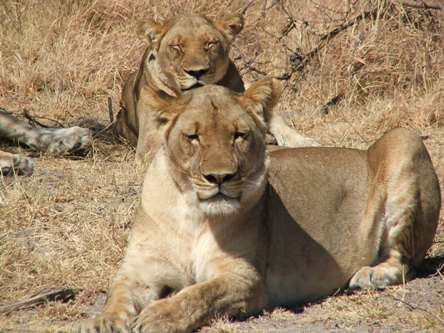
"Hundreds of buffalo leisurely grazing their way across the savannah as dusk fell will be my abiding memory of a few days in the Moremi Game Reserve, part of the vast Okavango Delta, in northern Botswana."
"Our guide Shylock spotted what we thought was just a small group, but after expertly circling round through the bush he found the front of what turned out to be a vast herd of Cape Buffalo. We could only watch in wonder for over half an hour as they strolled by, the odd magnificent bull giving us the once over as we observed them from the safety of our safari truck 30 yards away."
"An hour earlier, we had been even closer to a male lion, which showed the scars of a recent skirmish. Such splendid sights are what makes a safari the magical experience it is.:
Sunday, August 20, 2006
Maun and 'The Gates of Eden'
Sunday morning, my friend Ernest and I start out from Sedia Riverside Hotel on a trip up the Boro River and into Moremi Wildlife Reserve. To get from the Thamalakane River to the Boro you have to travel under two bridges - the water levels are now high enough to navigate all the way upstream by boat. Like Jacques Cousteau, alot of our outing is about research is about water.
The current is pushing downstream and the flood peak could still be a month away. Going up the Bore to the buffalo fence is about 12 km. You see domestic animals, birds and a variety of farming and garden plots along the river. The buffalo fence is the boundary of the Moremi Wildlife Reserve. Here, everything changes.
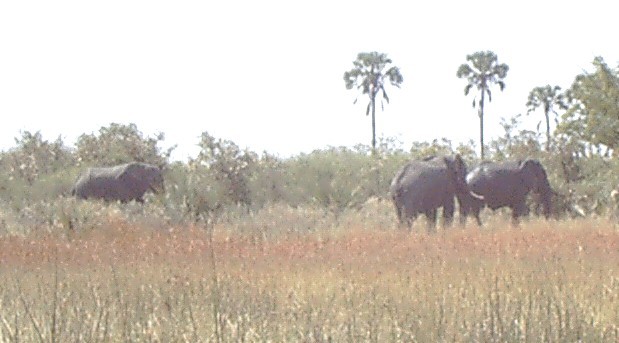
Now you enter the 'Gates of Eden' or as close as I am going to get in this lifetime. You don't go too many kilometres before you see wildlife. You feel like you are on a wet safari - cape buffalo, giraffe and elephants are not uncommon. The narrow river channel arcs and bends in front of you. The panorama is wonderful.
The current is pushing downstream and the flood peak could still be a month away. Going up the Bore to the buffalo fence is about 12 km. You see domestic animals, birds and a variety of farming and garden plots along the river. The buffalo fence is the boundary of the Moremi Wildlife Reserve. Here, everything changes.
Now you enter the 'Gates of Eden' or as close as I am going to get in this lifetime. You don't go too many kilometres before you see wildlife. You feel like you are on a wet safari - cape buffalo, giraffe and elephants are not uncommon. The narrow river channel arcs and bends in front of you. The panorama is wonderful.
Today we spend about half an hour watching elephants have their morning bath and eat brunch. Their brunch is a combination of river grasses and stripping branches from bushes. We have our lunch at a lagoon futher up stream and try some fishing. The lunch was satisfying and the fishing disappointing. Changing lures, adding small chunks of ham and even spitting on the lures didn't work. Fishing stories will have to wait for another trip
Subscribe to:
Posts (Atom)