Showing posts with label moremi. Show all posts
Showing posts with label moremi. Show all posts
Tuesday, January 05, 2016
Afro Trek Safaris in Moremi Game Reserve

The first 25 kilometres are tarred roads. Before leaving the tar we stop to buy firewood. Another 50 kilometres of gravel road brings us to South Gate, one of the Reserves main entrances. While Shylock, our guide, registers the vehicle and occupants we stretch out legs, warm ourselves in the sun and have a cup of hot coffee.
Our camp is in a mopane forest. Elephants like to eat mopane trees for food and it is not long before we come upon two elephants feeding themselves as they make their way through the forest. Elephant spore or huge balls of dung are regular occurrences in this kind of habitat. The river is starting to overflow its banks. We explore some of the plains areas that run off the river. Soon the plains will be closed off to vehicles by the increasing annual flood. The soft late afternoon light gives us a beautiful sighting of a small herd of impala. They are relaxed and graze quite close to the vehicle. Moving further around the edges of the plains we meet 5 or 6 wildebeests – the clown of the plains. They tend to be more animated than other large animals and often entertain with their characteristic canter and toss of their head and horns.
We look somewhat unsteady, getting out of our tents the following morning. Over toast, coffee, jam, eggs and hot beans we discuss the cause of the unsteadiness. Kelly decides it is because the cots are low and none of us have camped out in quite a while. Pulling on some extra clothes to ward off the morning chill, Trevor observes how low the whiskey bottle appears to be. We allmutter some level of surprise, with explanations verging towards the mysterious.
The terrain we are covering is similar to yesterday, although in the opposite direction and more inland from the river. Fortunately some water remains from the rains of three months ago. We come upon a picturesque small, receding pond. Henry David Thoreau would have been happy to be with us. The collection and activity level of the birds is priceless viewing.
The group is in high spirits heading back to camp for lunch and a rest. The afternoon game drive takes us across The Bridge Over the River Khwai, an assortment of floating mopane logs. Trevor has been hoping for a lion sighting and Shylock is out to give it his best shot. After about an hour drive and only seeing one old male elephant, Shylock appears to stop for a rest. Trevor is more than a little startled and draws our attention to a male lion resting in the tall golden grass. Suddenly we are all startled. There is also another male and female lying in the grass, not twenty metres away. It may seem over done to you, but we are using binoculars. The males have been fighting over the female and we are looking at the damages of battle – the cuts and bleeding. We leave wondering if the fighting is over or whether nightfall will bring another ferocious encounter.


Saturday, October 31, 2009
Wednesday, July 01, 2009
Moremi Game Reserve Safari
 Here we have two of our Afro Trek Safari Guides - Shylock in the middle and Kabelo 'KB' Kgafela on the far left with three Norwegian visitors. They did a three day safari around Moremi Game Reserve to end off the month of June. The game was plentiful, the food excellent and the company wonderful.
With the new season getting into full swing, Afro Trek is bringing two new Land Cruisers on stream. Book early to get the dates and camps that you want. Whether it's three days or six - a safaris trip of a lifetime can be organized for you.
Tuesday, January 15, 2008
Moremi Game Reserve - Rainy Season
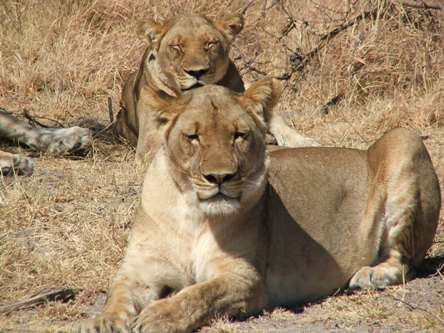
Lioneses Resting With Carcass - Paradise Pools, Moremi
Elephant Enjoying Mud Bath
Early January brought some friends from Canada for a visit to Maun. One of the things we did was a mobile safari with Shylock Raborokwe, into Moremi Game Reserve. The video above shows a huge male elephant enjoying a very wet mudhole. We saw pleny of game - hippos, kudu, impala, wildabeasts, sable, dudiker, crocs, saddlebacked storks, spur winged geese, lions....
Moremi is very wet this year. Northern Botswana is having a heavy rainy season - most places already have over 300mm and some are over 400mm. With 6 to 8 weeks still to go for prime rain times, it could be well above our average rain fall of 460mm.
Friday, August 10, 2007
Maun Safari - Game Flight Or Game Drive

Game Flight or Game Drive?
Let’s assume you have just arrived in Maun, Botswana and you have to plan your activity for the next day. If you have to choose between either doing a game flight or going on a day game drive to Moremi Game Reserve, what should you consider?
The game flight only takes about an hour. It leaves you plenty of time during the next day to rest, shop or catch up on some writing or reading. Mainly the participants seem to remember seeing herds of elephant or cape buffalo. Flying in a small Piper Cub is fun and if you are like me, you see the ground as a real life map.
On the other hand, a game drive starts early in the morning and is a full day activity. The potential to get close to lions, leopards, elephant, giraffe, hippo, wildebeest and a bounty of bird life are reasonably high. The packed lunch and chance for a short midday rest never disappoint.
If getting close to nature in a world renowned game reserve is your idea of fun, then the game drive is for you. If you need a rest and prefer a unique aerial perspective of the Delta, then go for the game flight.
Let’s assume you have just arrived in Maun, Botswana and you have to plan your activity for the next day. If you have to choose between either doing a game flight or going on a day game drive to Moremi Game Reserve, what should you consider?
The game flight only takes about an hour. It leaves you plenty of time during the next day to rest, shop or catch up on some writing or reading. Mainly the participants seem to remember seeing herds of elephant or cape buffalo. Flying in a small Piper Cub is fun and if you are like me, you see the ground as a real life map.
On the other hand, a game drive starts early in the morning and is a full day activity. The potential to get close to lions, leopards, elephant, giraffe, hippo, wildebeest and a bounty of bird life are reasonably high. The packed lunch and chance for a short midday rest never disappoint.
If getting close to nature in a world renowned game reserve is your idea of fun, then the game drive is for you. If you need a rest and prefer a unique aerial perspective of the Delta, then go for the game flight.
Friday, May 04, 2007
Moremi Gami Reserve - 1st Amongst Equals

Moremi Game Reserve
Moremi is often described as the most beautiful of all wildlife sanctuaries in Africa, covering almost a third of the entire Okavango Delta. It is a diverse habitat where the desert and delta meet - an area made up of floodplains, pans, lagoons, channels, woodlands and forests.
In 1963, the wife of the late Batawana Chief, Moremi the Third, developed the Moremi Game Reserve in his honour. It it was the first wildlife reserve to be set aside in southern Africa voluntarily, by an African community on their own land. In 1970, the Chief's royal hunting grounds, Chief's Island was added with a further area to the northeast in 1991.
The Reserve is a haven to wide variety of wildlife and many water dependant animals. Birdlife is prolific and also varied, ranging from water birds to shy forest dwellers. Elephants are numerous, particularly in the dry season, as well as a range of other wildlife species from buffalo, giraffe, lion, leopard, cheetah, wild dog, hyena, jackal and the full range of antelope, large and small including the Red Lechwe.
Moremi is often described as the most beautiful of all wildlife sanctuaries in Africa, covering almost a third of the entire Okavango Delta. It is a diverse habitat where the desert and delta meet - an area made up of floodplains, pans, lagoons, channels, woodlands and forests.
In 1963, the wife of the late Batawana Chief, Moremi the Third, developed the Moremi Game Reserve in his honour. It it was the first wildlife reserve to be set aside in southern Africa voluntarily, by an African community on their own land. In 1970, the Chief's royal hunting grounds, Chief's Island was added with a further area to the northeast in 1991.
The Reserve is a haven to wide variety of wildlife and many water dependant animals. Birdlife is prolific and also varied, ranging from water birds to shy forest dwellers. Elephants are numerous, particularly in the dry season, as well as a range of other wildlife species from buffalo, giraffe, lion, leopard, cheetah, wild dog, hyena, jackal and the full range of antelope, large and small including the Red Lechwe.
Moremi Game Reserve is best visited in the dry season, game viewing is at its peak from June to October, when the pans have dried up. The winter months of May to August can be very cold at night and early mornings, but pleasantly warm during the day. From October until the rains break in late November or early December, the weather can be very hot, with temperatures regularly topping 40 Celsius (105 Far.) in the day.
Sunday, March 04, 2007


Wednesday, February 14, 2007
Best Time to Safari in Botswana
The Best of Times - Botswana
Each period of the year offers different highlights, though May through to October / November are the months offering the best general wildlife viewing opportunities. The drier months result in better game viewing as the animals are forced to visit the fewer remaining water holes and pans in order to drink each day.
The predators merely have to wait at these water sources, being fewer in the drier months and therefore more crowded, for the animals to approach and commence drinking. For the wildlife enthusiast with limited time to spend, the period June to November is the wisest choice of times to go on safari in the Okavango Delta or Moremi Game Reserve.
In May, the flood waters from Angola are still making their slow and deliberate progress through the Okavango Delta. The rains have now ended, the nights are significantly cooler with temperatures averaging around 15 Celsius (60 Far) and day temperatures peaking at just over 30 Celsius (90 Far).
Breeding herds of elephant increase in density as they visit the perennial rivers of the Okavango, Chobe and Kwando. The seasonal pans begin to dry up. The lush greens, so evident in the wet season, begin to fade quickly into the duller dry season colours, allowing the predators to take full advantage of the fact that their coats now blend in with their surroundings again. The migrating birds commence their annual flights to winter feeding and breeding grounds in distant lands.
In June, temperatures reach their lowest, night temperatures towards the months end can drop to below zero (32 Far) but day temperatures still hit around 30Celsius (75 Far ) . Dry and dusty conditions now dominate with pans and water holes now resulting in the animals drinking at permanent water sources, closely followed by the predators
However, the wet months of December through to March offer other spectacular highlights which should not be overlooked. Obviously the vegetation at this time of year is rich with lush green growth evident everywhere.
Many of the antelope family have young ones during this period to take advantage of these nutritious grasses for grazing. This again offers predators rich pickings - these very young antelopes being easy prey for lion, cheetah, leopard or wild dog. For the birding enthusiasts the wet months can be a delight with many males of the various species displaying their full breeding plumage.
Each period of the year offers different highlights, though May through to October / November are the months offering the best general wildlife viewing opportunities. The drier months result in better game viewing as the animals are forced to visit the fewer remaining water holes and pans in order to drink each day.
The predators merely have to wait at these water sources, being fewer in the drier months and therefore more crowded, for the animals to approach and commence drinking. For the wildlife enthusiast with limited time to spend, the period June to November is the wisest choice of times to go on safari in the Okavango Delta or Moremi Game Reserve.
In May, the flood waters from Angola are still making their slow and deliberate progress through the Okavango Delta. The rains have now ended, the nights are significantly cooler with temperatures averaging around 15 Celsius (60 Far) and day temperatures peaking at just over 30 Celsius (90 Far).
Breeding herds of elephant increase in density as they visit the perennial rivers of the Okavango, Chobe and Kwando. The seasonal pans begin to dry up. The lush greens, so evident in the wet season, begin to fade quickly into the duller dry season colours, allowing the predators to take full advantage of the fact that their coats now blend in with their surroundings again. The migrating birds commence their annual flights to winter feeding and breeding grounds in distant lands.
In June, temperatures reach their lowest, night temperatures towards the months end can drop to below zero (32 Far) but day temperatures still hit around 30Celsius (75 Far ) . Dry and dusty conditions now dominate with pans and water holes now resulting in the animals drinking at permanent water sources, closely followed by the predators
However, the wet months of December through to March offer other spectacular highlights which should not be overlooked. Obviously the vegetation at this time of year is rich with lush green growth evident everywhere.
Many of the antelope family have young ones during this period to take advantage of these nutritious grasses for grazing. This again offers predators rich pickings - these very young antelopes being easy prey for lion, cheetah, leopard or wild dog. For the birding enthusiasts the wet months can be a delight with many males of the various species displaying their full breeding plumage.
Monday, January 22, 2007
Afro Trek Safety Briefing #2
Safari Briefing – Safety 2
The open safari vehicle does provide a surprising degree of protection. You will be amazed at how close you can get to a lion. Your safari guide will try to get the best setting for your photos and videos. You only leave the vehicle with your guides’ permission.
Predators like lion and hyena are always a concern. Too many accidents happen because the big animals are territorial or protecting their young. Hippos are the most dangerous. They can change from grazing to charge mode surprisingly quickly. Cape Buffalo can be very skittish and mean spirited.
Listen to you guides’ guidance. Also, listen to his stories around the campfire at night. The information can save your life.
The open safari vehicle does provide a surprising degree of protection. You will be amazed at how close you can get to a lion. Your safari guide will try to get the best setting for your photos and videos. You only leave the vehicle with your guides’ permission.
Predators like lion and hyena are always a concern. Too many accidents happen because the big animals are territorial or protecting their young. Hippos are the most dangerous. They can change from grazing to charge mode surprisingly quickly. Cape Buffalo can be very skittish and mean spirited.
Listen to you guides’ guidance. Also, listen to his stories around the campfire at night. The information can save your life.
Thursday, January 04, 2007
Afro Trek Safari Goes International
BlogBurst has just accepted Afro Trek Safari into their syndication. Wonderful news to start the New Year. More people from around the world will share the wonders of the Okavango Delta and destination areas like Moremi Game Reserve and the Tsodilo Hills. BlogBurst is described below, in their own words:
"BlogBurst is a syndication service that places your blog content on top-tier online destinations. You get visibility, audience reach and increased traffic, while publishers get a wide range of new coverage to broaden their reach and increase page views."
BlogBurst clients to date include the following international clients: Reuters, USA Today, Gannet, SF Gate, The Washington Post and Discovery.
"BlogBurst is a syndication service that places your blog content on top-tier online destinations. You get visibility, audience reach and increased traffic, while publishers get a wide range of new coverage to broaden their reach and increase page views."
BlogBurst clients to date include the following international clients: Reuters, USA Today, Gannet, SF Gate, The Washington Post and Discovery.
Saturday, December 16, 2006
Thursday, December 14, 2006
Afro Trek Flexibility
Afro Trek Safari has been busy during October and November. There have been day and overnight trips into Moremi Game Reserve. Other safaris have taken Afro Trek to Chobe Game Reserve, Savuti and Nxai Pan.
The annual rains are only just beginning in Northern Botswana. Trip plans for December to February will have to be flexible, with possible adjustments because of weather conditions. Not to worry, campers are a hardy group and the rain showers are often short and the skies exceptionally beautiful.
Remember, on the edge of the Kalahari Desert – life is all about water.
The annual rains are only just beginning in Northern Botswana. Trip plans for December to February will have to be flexible, with possible adjustments because of weather conditions. Not to worry, campers are a hardy group and the rain showers are often short and the skies exceptionally beautiful.
Remember, on the edge of the Kalahari Desert – life is all about water.
Monday, December 04, 2006
Les Francaises on Safari - Le Professor

Excursion à Moremi
Un Game drive est toujours plein de surprises. Ce fut le cas. Départ très matinal : 6h
Nous sommes 16, il faut donc 2 4x4. Sur les banquettes nous gelons pendant le trajet que durera 2h jusqu’à la première entée. Petite pause d’une ½ h avec café et biscuits. Déjà quelques observations de gazelles et girafes aussi que d’oiseaux. L’excursion commence vraiment après la 2 eme entrée quand les plans d’eau apparaissent. La piste est plus étroite et plus route.
Observations réalisées :
1) Mammifères :
Girafes +de 20, Eléphants + de 100, Singes verts 10, Hippopotames 20, Gazelles et antilopes +200, Cobe défassa, Cobées rouges, Steenboks, Impalas en grand nombre, 2 lions au repas ainsi qu’une lionne
2) Oiseaux :
2 cormorans africains, 3 hérons cendrés, 1 aigrette ordoisée, 2 aigrettes ….., 3 ombrettes, 2 tantales, 1 cigogne blanche, 5 lois sacrés, 10 oies d’Egypte, 3 oies de Gambie, 2 aigles pecheurs, 1 aigle bateleur, 150 francolins à bec rouge, 30 pintades, 1 grue conanculee, 1 outarde, 25 jacanas, 40 vanneaux armés, 100 tourterelles du Cap et à colliées, 5 tomeras ……., 10 grepeurs en …., 5 rolliers à longs brins, 80 calaas à bec rouge, 2 hiromdeles, 1 gonolek rouge et noir, 50 …….. Flèches, Vols de tisserins travailleurs à bec rouge, 30 étourneaux métalliques, 10 étourneaux d’Alexandre, 30 fraque-boeufs, 5 corbeaux, quelques coucon et 1 vanran
Le pique-nique est délicieux : (salade, poulet sandwiches), jus de mangue ….Fruits ( banane poires). Le retour commence à 15h30 après observation finale de lions. Poussiéreux nous rentrons vers 18h45 plein d’émerveillements.
Monday, November 20, 2006
Maun Safari Flashback
Birdwatching With Kelly Revisited
I received an email over the weekend from Hugh Kelly. He is thinking about bringing some family members to Maun and taking them on safari. It was fun to think back to the trip we did 6 months ago. Along with his reflections on our safari, Kelly also provided a more complete version of his pelican ditty:
'Regarding pelicans - funny old birds, as discussed around the campfire
after a few shots of Bells.'
" A funny old bird is the Pelican
His beak can hold more than his belly can
He fills up his beak
With enough food for a week
But I'm sure I don't know how the hell he can"
I received an email over the weekend from Hugh Kelly. He is thinking about bringing some family members to Maun and taking them on safari. It was fun to think back to the trip we did 6 months ago. Along with his reflections on our safari, Kelly also provided a more complete version of his pelican ditty:
'Regarding pelicans - funny old birds, as discussed around the campfire
after a few shots of Bells.'
" A funny old bird is the Pelican
His beak can hold more than his belly can
He fills up his beak
With enough food for a week
But I'm sure I don't know how the hell he can"
Thursday, November 09, 2006
San Diego Reader - Breaking News
Afro Trek Safari, Botswana Breaks Through!
For stories about Botswana, the Okavango Delta and Moremi Game Reserve click and go to the San Diego Reader. This weeks story is the second of five stories to be published during the month of November. You can read the first short story by clicking 'previous blogs' after the end of this story.
Diva Barbarella was gracious enough to contact Delta Dave about two months ago, requesting Botswana stories for her newspaper. It has been fun writing the stories and has helped me focus on what I really like about Botswana. Hope the readers of the Afro Trek blog enjoy them.
For stories about Botswana, the Okavango Delta and Moremi Game Reserve click and go to the San Diego Reader. This weeks story is the second of five stories to be published during the month of November. You can read the first short story by clicking 'previous blogs' after the end of this story.
Diva Barbarella was gracious enough to contact Delta Dave about two months ago, requesting Botswana stories for her newspaper. It has been fun writing the stories and has helped me focus on what I really like about Botswana. Hope the readers of the Afro Trek blog enjoy them.
Saturday, October 28, 2006
Wildlife Magic On Safari, Botswana Part 2

Trevor's Safari Continues - From The Daily Post, Liverpool
To read Trevor Peake's review of Sedia Riverside Hotel click this link.
"Herds of impala, zebra, and wildebeest abound in the Delta. Giraffe are encountered alone or in small groups, as are elephant, the Greater Kudu, a large browsing antelope, and Red Lechwe, another antelope with raised hindquarters and deeply splayed hooves which allow it to run swiftly through the shallow waters."
"Warthogs, wild dogs, mongoose and baboons are frequently spotted, but the sight of a leopard or any other member of the cat family is a rare treat, one denied us apart from the fairly comotose lions. But there is always an abundance of multi-coloured birdlife, with species too numerous to mention."
"A must during my stay though, was a mokoro trip. A mokoro is a native dug-out canoe, poled through the shallow waters of the Delta in almost total silence, which leaves the birds undisturbed to put on a display as they go about their business."
Sunday, October 22, 2006
Wildlife Magic on Safari, Botswana
 Trevor Peake Enjoys A Trip To Botswana, Part 1
From the pages of the Liverpool, Daily Post in Trevors own words -
"Hundreds of buffalo leisurely grazing their way across the savannah as dusk fell will be my abiding memory of a few days in the Moremi Game Reserve, part of the vast Okavango Delta, in northern Botswana."
"Our guide Shylock spotted what we thought was just a small group, but after expertly circling round through the bush he found the front of what turned out to be a vast herd of Cape Buffalo. We could only watch in wonder for over half an hour as they strolled by, the odd magnificent bull giving us the once over as we observed them from the safety of our safari truck 30 yards away."
"An hour earlier, we had been even closer to a male lion, which showed the scars of a recent skirmish. Such splendid sights are what makes a safari the magical experience it is.:
Tuesday, October 17, 2006
Afro Trek Country, Botswana
 I cannot remember where the map comes from, but it's a good one. It hightlights Moremi Game Reserve and a number of the camps and lodges around the Okavango Delta. Afro Trek does regular trips to the Tsodilo Hills in the north west all the way over to Chobe National Park in the east. Moremi Game Reserve remains our most popular destination area.
Right now, the Delta is about as full of water as the map shows - rare for this time of year. Usually the Delta is receding back upstream or drying out - at least from Maun and north. The rainy season is approaching and it will be interesting to see how long water levels can stay at current peaks. It is one of the best years in a long time for using the river. Mokoro Trails is also enjoying the year round water we are experiencing. They are continuing to receive a steady stream of mokoro travellers.
Monday, September 25, 2006
Maun Safari Choices
July, August and September is the peak season for mobile safaris. Shylock was back in Maun this weekend. He has travelled much of Botswana, showing his guests the parts of the country he loves best. Much of the time he has been in Moremi Game Reserve and Chobe National Park.
Shylock likes trips of all sizes and durations. For a one day trip, an early start is key. Much of the trip into Moremi is a game drive. Bird lovers do best in the morning and sighting are plentiful. After a good lunch and short rest the guests are ready for a game drive that turns in our return trip. By the time we return ar dusk, enem the big game viewers are happy. From Shylock's perspective, "A guides best friend is an interested guest. They make it happen for everyone on the mobile safari."
Wednesday, August 30, 2006
Botswana National Bird?
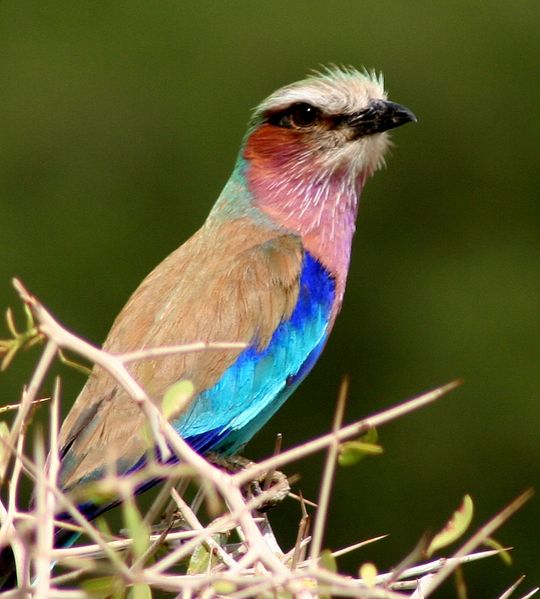
In an earlier blog I mentioned that the Lilac Breasted Roller was the national bird of Botswana. A member of Birdlife Botswana has commented that Botswana does not have a national bird. I defer to his far more knowledgeable perspective and would like to set the record straight.
I was talking about the lilac breasted roller this week with a local guide and he expressed surprise. In the end we recognized it may be one of the great bird mysteries of Botswana. Where did the misconception start? Perhaps the lilac breasted roller should be made the national bird of Botswana and take it's place proudly alongside the zebra. It would look good on the coat of arms for Botswana.
You are encouraged to click on the Birdlife Botswana link above to find out what is happening with birds in Botswana. To go to the source of the photo please click here. I am so slow with a camera it would take me forever to get a photo of this beautiful bird.

Subscribe to:
Posts (Atom)