Showing posts with label safari. Show all posts
Showing posts with label safari. Show all posts
Tuesday, January 05, 2016
Afro Trek Safaris in Moremi Game Reserve

The first 25 kilometres are tarred roads. Before leaving the tar we stop to buy firewood. Another 50 kilometres of gravel road brings us to South Gate, one of the Reserves main entrances. While Shylock, our guide, registers the vehicle and occupants we stretch out legs, warm ourselves in the sun and have a cup of hot coffee.
Our camp is in a mopane forest. Elephants like to eat mopane trees for food and it is not long before we come upon two elephants feeding themselves as they make their way through the forest. Elephant spore or huge balls of dung are regular occurrences in this kind of habitat. The river is starting to overflow its banks. We explore some of the plains areas that run off the river. Soon the plains will be closed off to vehicles by the increasing annual flood. The soft late afternoon light gives us a beautiful sighting of a small herd of impala. They are relaxed and graze quite close to the vehicle. Moving further around the edges of the plains we meet 5 or 6 wildebeests – the clown of the plains. They tend to be more animated than other large animals and often entertain with their characteristic canter and toss of their head and horns.
We look somewhat unsteady, getting out of our tents the following morning. Over toast, coffee, jam, eggs and hot beans we discuss the cause of the unsteadiness. Kelly decides it is because the cots are low and none of us have camped out in quite a while. Pulling on some extra clothes to ward off the morning chill, Trevor observes how low the whiskey bottle appears to be. We allmutter some level of surprise, with explanations verging towards the mysterious.
The terrain we are covering is similar to yesterday, although in the opposite direction and more inland from the river. Fortunately some water remains from the rains of three months ago. We come upon a picturesque small, receding pond. Henry David Thoreau would have been happy to be with us. The collection and activity level of the birds is priceless viewing.
The group is in high spirits heading back to camp for lunch and a rest. The afternoon game drive takes us across The Bridge Over the River Khwai, an assortment of floating mopane logs. Trevor has been hoping for a lion sighting and Shylock is out to give it his best shot. After about an hour drive and only seeing one old male elephant, Shylock appears to stop for a rest. Trevor is more than a little startled and draws our attention to a male lion resting in the tall golden grass. Suddenly we are all startled. There is also another male and female lying in the grass, not twenty metres away. It may seem over done to you, but we are using binoculars. The males have been fighting over the female and we are looking at the damages of battle – the cuts and bleeding. We leave wondering if the fighting is over or whether nightfall will bring another ferocious encounter.
Saturday, October 03, 2009
Tuesday, September 15, 2009
Maun & Afro Trek Safaris on the Web

Afro Trek Safaris - connected to the World Wide Web. Use the following sites to find out more about Maun, Botswana and Afro Trek Safaris - happy surfing, just click!
1. Home Page of AfroTrek Safaris
2. News about AfroTrek and Maun, Botswana
3. Hotel & Tourism Association of Botswana
4. Home Page of Sedia Riverside Hotel
5. Maun’s weekly newspaper
6. WikiTravel Web Guide
Wednesday, July 01, 2009
Moremi Game Reserve Safari
 Here we have two of our Afro Trek Safari Guides - Shylock in the middle and Kabelo 'KB' Kgafela on the far left with three Norwegian visitors. They did a three day safari around Moremi Game Reserve to end off the month of June. The game was plentiful, the food excellent and the company wonderful.
With the new season getting into full swing, Afro Trek is bringing two new Land Cruisers on stream. Book early to get the dates and camps that you want. Whether it's three days or six - a safaris trip of a lifetime can be organized for you.
Saturday, March 22, 2008
Maun Safari - Mokoro Trails,The Transparent Reality

Over the past few years, the Okavango Delta and Maun in particular, has become perceived as an expensive destination with many Overland Companies no longer stopping in Maun due to what are considered to be high rates for activities such as Mokoro Trails. Even when Overland Companies do stopover in Maun, a growing number of passengers choose not to do key activities such as the Mokoro Trails because of the rates being quoted.
The rates at Sedia Riverside Hotel and Afro Trek Safaris are constantly reviewed taking in to consideration the declining value of the Botswana Pula against the US dollar, so that we always offer the best possible rates to our guests.
Below, we have described how the Mokoro Trails activity is arranged through the Community Trust that owns the concession area in which the trails are done and the rates the Trust charge locally based licensed safari operators , such as ourselves, for the Mokoro Trails activity. The Mokoro Trails activity forms a part of the Community Based Tourism Policy promoted by the Botswana Government in order to encourage rural communities to generate work and earn an income from the resources of the rural areas in which they live, namely the wilderness.
All drive-in Mokoro Trails from Maun are undertaken in the Okavango Kopano Mokoro Community Trust , known as the OKMCT. The OKMCT have outsourced the Mokoro Trail activity to various Safari Operators based in Maun who market the trails and provide transport for the transfers from Maun into the Mokoro Poling stations within the OKMCT Concession Area. The most popular poling Station being at Boro, which is used by virtually all safari operators from Maun.
Afro Trek Rates for the Mokoro Trails Activity, including transfer charges are :
2 Day / 1 Night Trail US $ 110 - 00 per person
3 Day / 2 Night Trail US $ 125 - 00 per person
1 Day Mokoro Trail US $ 90 - 00 per person
( Rates valid for a minimum of four or more persons.)
The OKMCT is totally autonomous in the management of the Mokoro Trails activity and have fixed the daily rates which safari operators are charged as follows :
Licensed Guide with Mokoro US $ 25 - 00 per day
Licensed Poler with Mokoro US $ 20 - 00 per day
Entrance Fee to Concession US $ 6 - 50 per day
These rates exclude transfer charges into the concession poling station, this transfer is provided and charged for by the Maun based safari operator, the transfer charge being added to the OKMCT fixed rates for the mekoro and entrance fees , by the Maun based safari operator.
For a group of say 10 doing a two day / one night mokoro trail , the charges by the OKMCT would be just under US $ 40 per person. Afro Trek transfer charges into the Mokoro Poling station in the concession area are about US$ 40 per person ( In and Out of the concession area ) and are included in our rates given above.
Since the Boro Poling station lies under 20 kms from Maun and, we feel this rate to be fair and reasonable and covers our transfer costs , ground crew costs , public liability insurance costs, administration costs and vehicle maintenance costs.
The Afro Trek Mokoro Trails depart from the Riverside Hotel campsite for the Boro or Ditshipi Poling Stations. For the Mokoro Trails Transfers we use customised Toyota Landcruisers with rear mounted game viewing seats with a trailer for the luggage.
We feel the above transparency in our rate structuring is important, so that our passengers know where their money is going and that it will encourage more people to participate in a Mokoro Trails and in so doing meet some of the Bayei Tribe who live in the OKMCT concession area and have a real eco-tourism experience at a fair rate. All our guides and drivers are from the region, two of them being from the Kopano Trust area so passengers are given a good insight into the culture and traditions of the people.
The rates at Sedia Riverside Hotel and Afro Trek Safaris are constantly reviewed taking in to consideration the declining value of the Botswana Pula against the US dollar, so that we always offer the best possible rates to our guests.
Below, we have described how the Mokoro Trails activity is arranged through the Community Trust that owns the concession area in which the trails are done and the rates the Trust charge locally based licensed safari operators , such as ourselves, for the Mokoro Trails activity. The Mokoro Trails activity forms a part of the Community Based Tourism Policy promoted by the Botswana Government in order to encourage rural communities to generate work and earn an income from the resources of the rural areas in which they live, namely the wilderness.
All drive-in Mokoro Trails from Maun are undertaken in the Okavango Kopano Mokoro Community Trust , known as the OKMCT. The OKMCT have outsourced the Mokoro Trail activity to various Safari Operators based in Maun who market the trails and provide transport for the transfers from Maun into the Mokoro Poling stations within the OKMCT Concession Area. The most popular poling Station being at Boro, which is used by virtually all safari operators from Maun.
Afro Trek Rates for the Mokoro Trails Activity, including transfer charges are :
2 Day / 1 Night Trail US $ 110 - 00 per person
3 Day / 2 Night Trail US $ 125 - 00 per person
1 Day Mokoro Trail US $ 90 - 00 per person
( Rates valid for a minimum of four or more persons.)
The OKMCT is totally autonomous in the management of the Mokoro Trails activity and have fixed the daily rates which safari operators are charged as follows :
Licensed Guide with Mokoro US $ 25 - 00 per day
Licensed Poler with Mokoro US $ 20 - 00 per day
Entrance Fee to Concession US $ 6 - 50 per day
These rates exclude transfer charges into the concession poling station, this transfer is provided and charged for by the Maun based safari operator, the transfer charge being added to the OKMCT fixed rates for the mekoro and entrance fees , by the Maun based safari operator.
For a group of say 10 doing a two day / one night mokoro trail , the charges by the OKMCT would be just under US $ 40 per person. Afro Trek transfer charges into the Mokoro Poling station in the concession area are about US$ 40 per person ( In and Out of the concession area ) and are included in our rates given above.
Since the Boro Poling station lies under 20 kms from Maun and, we feel this rate to be fair and reasonable and covers our transfer costs , ground crew costs , public liability insurance costs, administration costs and vehicle maintenance costs.
The Afro Trek Mokoro Trails depart from the Riverside Hotel campsite for the Boro or Ditshipi Poling Stations. For the Mokoro Trails Transfers we use customised Toyota Landcruisers with rear mounted game viewing seats with a trailer for the luggage.
We feel the above transparency in our rate structuring is important, so that our passengers know where their money is going and that it will encourage more people to participate in a Mokoro Trails and in so doing meet some of the Bayei Tribe who live in the OKMCT concession area and have a real eco-tourism experience at a fair rate. All our guides and drivers are from the region, two of them being from the Kopano Trust area so passengers are given a good insight into the culture and traditions of the people.
Monday, October 01, 2007
Fish Eagle - Take Away Dinner
Done in split seconds! Here we have the Fish Eagle - high priest of the Okavango River, getting his lunch. At this time of year, September-October, the water is so clear and it is hard to see a missed catch.
Notice the way it corrects its flight pattern after catching the fish. Then it goes back to a favourite tree or nest and has lunch. Fish Eagles can fly away with fish up to 4 pounds. If it can't fly, it will drag the fish along the surface of the river until it reaches the far shore. I have yet to see that happen.
Thursday, July 05, 2007
The Central Kalahari Game Reserve

The Kalahari Desert covers most of Botswana, about 80% of the country is Kalahari savannah, grasslands and dry sandveld. There is no surface water, only a few perennial springs, poor soils and precious little rain or metsi. The Kalahari Desert is better described as an arid savanna wilderness scantily covered with sweet grasses and patches of camelthorn, blackthorn and other aciacas. However, a rich diversity of wildlife is sustained by this desert wilderness area.
The aboriginal inhabitants of Botswana are the San or Bushmen, who made the Kalahari their home for more than 30,000 years ago. The San have a rich cultural heritage and now reside in different parts of the country but the majority of them still reside in the Kalahari region.
The Kalahari Desert is better described as an arid savanna wilderness scantily covered with sweet grasses and patches of camelthorn, blackthorn and other aciacas. However, a rich diversity of wildlife is sustained by this desert wilderness area.
The animals dwelling here are superbly adapted to these extremely dry conditions, amongst which are gemsbok, blue wildebeest , springbok , eland , red hartebeest , lion , leopard , hyena and wild dog. Many of these animals survive on water extracted from dew covered plants and deep rooted succulents.
The Central Kalahari Game Reserve, set aside as a protected area, ranks among the worlds wildest and most remote game reserve. The area is largely flat, with shallow valleys, vast pans and remote hills. Pipers Pan , Tau Pan and Deception Valley are to be found in this area.
The aboriginal inhabitants of Botswana are the San or Bushmen, who made the Kalahari their home for more than 30,000 years ago. The San have a rich cultural heritage and now reside in different parts of the country but the majority of them still reside in the Kalahari region.
The Kalahari Desert is better described as an arid savanna wilderness scantily covered with sweet grasses and patches of camelthorn, blackthorn and other aciacas. However, a rich diversity of wildlife is sustained by this desert wilderness area.
The animals dwelling here are superbly adapted to these extremely dry conditions, amongst which are gemsbok, blue wildebeest , springbok , eland , red hartebeest , lion , leopard , hyena and wild dog. Many of these animals survive on water extracted from dew covered plants and deep rooted succulents.
The Central Kalahari Game Reserve, set aside as a protected area, ranks among the worlds wildest and most remote game reserve. The area is largely flat, with shallow valleys, vast pans and remote hills. Pipers Pan , Tau Pan and Deception Valley are to be found in this area.
Friday, June 08, 2007
Pelicans Cover Maun Skies

Pelicans In Formation Over Maun
Late afternoon the banks of the Thamalakane River can be covered with hundreds of Pelicans coming together for a night of rest. During the days you can now often look up and see squadrons of Pelicans circling over Maun. On good days, with plenty of wind, they are up in the sky playing with the thermals - dipping and diving, regrouping and doing the process over and over again.
With the new flood about to arrive in Maun, it can only be hoped they will stay with us for a while longer. It remind's me again of the old ditty Kelly would recite when we were on safari together:
"A funny old bird is the pelican.
His beak can hold more than his belly can.
He can hold in his beak
Enough food for a week,
And I don't know how in the world he manages to do it!"
On days like this, it makes you wonder - should the Pelican be the National Bird of Botswana. For another perspective of the Pelicans in Maun - click here.
Sunday, May 20, 2007
Lioneses Attack Cape Buffalo
Life In The Wilderness
For those of you interested in seeing a video of Lionesses attacking a Cape Buffalo, visit TOPIX - Botswana. Take in a couple of minutes of what you can see when you are on mobile safari - life in the wild. These are often the stories that are discussed around the campfire, after dinner.
For those of you interested in seeing a video of Lionesses attacking a Cape Buffalo, visit TOPIX - Botswana. Take in a couple of minutes of what you can see when you are on mobile safari - life in the wild. These are often the stories that are discussed around the campfire, after dinner.


Saturday, May 12, 2007
Safari Safely In Botswana

Botswana Safari Safety
The open safari vehicle does provide a surprising degree of protection. You will be amazed at how close you can get to a lion. Your safari guide will try to get the best setting for your photos and videos. You only leave the vehicle with your guides’ permission.
Predators like lion and hyena are always a concern. Too many accidents happen because the big animals are territorial or protecting their young. Hippos are the most dangerous. They can change from grazing to charge mode surprisingly quickly. Cape Buffalo can be very skittish and mean spirited.Listen to you guides’ guidance. Also, listen to his stories around the campfire at night. The information can save your life.
Whether you are staying at a lodge in the Okavango Delta or on mobile safari with Afro Trek Safari, safety is always concern number 1. Everyone has to realize that when you are on safari in the game reserves, you really are inside the zoo.
Whether you are staying at a lodge in the Okavango Delta or on mobile safari with Afro Trek Safari, safety is always concern number 1. Everyone has to realize that when you are on safari in the game reserves, you really are inside the zoo.
The pre-trip briefing, by your professional guide, is extremely important. It is your responsibility to understand and closely follow the safety guidelines. Make sure your fellow travellers understand the guidelines. Make sure your safari of a liftime is memorable for all the right reasons.Your guide wants to get you as close to the big game as possible, in a safe manner. 99.9% of safaris run smoothly. Make sure you are not that 1 in a 1000.
Campfire Safety Perspectives:
Campfire Safety Perspectives:
After a day on safari exploring for big game and a great dinner in the bush, it is not unusual to sit up for awhile around the campfire. Often, the guides and guests share some great stories. Often the stories are about near accidents or narrow escapes. The themes often come back to safety. Some stories may be fanciful - many are not.
1. Bending over the side of a boat to free a fishing line as a crocodile jumps from a nearby bank and passes just over the startled person…
2. Escape by jumping over a log to get away from a charging hippo…
3. When a lion attacks, keep staring the lion straight in the eyes – it will stop. Your heart may also stop, but that is another story.
4. A guest video taping his own death, walking toward a buffalo herd…5. Last but not least – hyenas. Often they are around camps at night. Their yup – yup sound is distinctive and yup, they can be very dangerous. Follow you guides advice about staying inside your zipped-up tent.
Friday, May 04, 2007
Moremi Gami Reserve - 1st Amongst Equals

Moremi Game Reserve
Moremi is often described as the most beautiful of all wildlife sanctuaries in Africa, covering almost a third of the entire Okavango Delta. It is a diverse habitat where the desert and delta meet - an area made up of floodplains, pans, lagoons, channels, woodlands and forests.
In 1963, the wife of the late Batawana Chief, Moremi the Third, developed the Moremi Game Reserve in his honour. It it was the first wildlife reserve to be set aside in southern Africa voluntarily, by an African community on their own land. In 1970, the Chief's royal hunting grounds, Chief's Island was added with a further area to the northeast in 1991.
The Reserve is a haven to wide variety of wildlife and many water dependant animals. Birdlife is prolific and also varied, ranging from water birds to shy forest dwellers. Elephants are numerous, particularly in the dry season, as well as a range of other wildlife species from buffalo, giraffe, lion, leopard, cheetah, wild dog, hyena, jackal and the full range of antelope, large and small including the Red Lechwe.
Moremi is often described as the most beautiful of all wildlife sanctuaries in Africa, covering almost a third of the entire Okavango Delta. It is a diverse habitat where the desert and delta meet - an area made up of floodplains, pans, lagoons, channels, woodlands and forests.
In 1963, the wife of the late Batawana Chief, Moremi the Third, developed the Moremi Game Reserve in his honour. It it was the first wildlife reserve to be set aside in southern Africa voluntarily, by an African community on their own land. In 1970, the Chief's royal hunting grounds, Chief's Island was added with a further area to the northeast in 1991.
The Reserve is a haven to wide variety of wildlife and many water dependant animals. Birdlife is prolific and also varied, ranging from water birds to shy forest dwellers. Elephants are numerous, particularly in the dry season, as well as a range of other wildlife species from buffalo, giraffe, lion, leopard, cheetah, wild dog, hyena, jackal and the full range of antelope, large and small including the Red Lechwe.
Moremi Game Reserve is best visited in the dry season, game viewing is at its peak from June to October, when the pans have dried up. The winter months of May to August can be very cold at night and early mornings, but pleasantly warm during the day. From October until the rains break in late November or early December, the weather can be very hot, with temperatures regularly topping 40 Celsius (105 Far.) in the day.
Sunday, April 01, 2007
Baines Baobabs - Exotic and Strange

Baines Baobabs - Out of this World
Any visit to Nxai Pan is not complete without a detour to see Baines Baobabs and the pans that surround them. We saw gemsbok, elephant and the old secretary bird on the way in. It really is quite a shock to see this errie landscape out in the middle of nowhere. They look much as they did when they were painted by Baines many years ago.
Baines Baobabs is a great place to have lunch, walk around and marvel at the unique setting - marvel at the size of the baobabs and try and figure out why people carve their initials into trees. There is a camp site nearby that, I think, would be worth trying in or around a full moon - you know, add to that errie feeling.
Any visit to Nxai Pan is not complete without a detour to see Baines Baobabs and the pans that surround them. We saw gemsbok, elephant and the old secretary bird on the way in. It really is quite a shock to see this errie landscape out in the middle of nowhere. They look much as they did when they were painted by Baines many years ago.
Baines Baobabs is a great place to have lunch, walk around and marvel at the unique setting - marvel at the size of the baobabs and try and figure out why people carve their initials into trees. There is a camp site nearby that, I think, would be worth trying in or around a full moon - you know, add to that errie feeling.
Tuesday, March 20, 2007
Dancing With Elephants - Nxai Pan

Nxai Pan - Bull Elephant Hangout
Nxai Pan is worth visiting 12 months a year. Located about 180 km. or three hours from Maun, the safari expedition can be done in one day, however it is best done overnight. The camps are in very good shape. Expect to hear lions and maybe be visited by elephants. Actually, we were visited by an elephant around 3 in the morning. It was sniffing around our vehicles and tents - quite a sniff, quit a sniffer! The camp site has running water and the elephant was looking for a way to liberate it - an old elephant activity.
Animals are busiest during the rainy season. By mid March the last water hole is being fed by underground pipes. The females and their young have left the bulls behind, so they can stand around the water hole and brag about last season. Springbok are plentiful, with a sprinkling of black back jackel, impala and gemsbok. The secretary bird seems to show up frequently, always on it's own.
Sunday, March 04, 2007


Saturday, February 24, 2007
Afro Trek Safaris To Chobe

Chobe National Park
Chobe National Park is divided into four main focal points. The Chobe Riverfront with floodplains and teak forests; Savute Marsh in the South West; the Linyanti Swamps in the North West and the hot, dry hinterland in between.
The Chobe National Park covers 10,000 sq. km., which is about 4,000 sq. metres and one of the major features is the elephant population. The Chobe elephant comprise part of what is probably the largest surviving continuous elephant population, which covers most of northern Botswana plus northwestern Zimbabwe and is estimated to be well over 100,000 strong. The Chobe elephants are migratory making seasonal movements of up to 200 km. from the Chobe and Linyanti river systems, where they concentrate in the dry seasons.
Game viewing is at its best during the dry months of May through to September, when the majority of natural pans have dried up and the game concentrates around the permanent water sources. Most wildlife activity occurs along the banks of the Chobe River. Hippos bathe, crocodiles sun themselves and wildebeest, zebra and buffalo gambol freely.
The buffalo herds are invariably accompanied by attendant lions, which can result in, the much sought after viewing of a lion kill. Sadly, such a sight in Chobe these days may have to be shared with many other tourists in game viewing vehicles (most of these vehicles now fitted with radios for communication with each other), gridlock could be experienced. However, maybe the awe of the spectacle outweighs any distraction from other game viewing vehicles in the immediate vicinity, some may not agree.
Many baboons and the elusive Chobe bushbuck can be spotted along the riverbank. Not to be missed by party animals is the afternoon boat9or booze) cruises available from most of the riverside lodges in Kasane. The Chobe riverfront offers beautiful scenery and stunning, dramatic sunsets.
Chobe National Park is divided into four main focal points. The Chobe Riverfront with floodplains and teak forests; Savute Marsh in the South West; the Linyanti Swamps in the North West and the hot, dry hinterland in between.
The Chobe National Park covers 10,000 sq. km., which is about 4,000 sq. metres and one of the major features is the elephant population. The Chobe elephant comprise part of what is probably the largest surviving continuous elephant population, which covers most of northern Botswana plus northwestern Zimbabwe and is estimated to be well over 100,000 strong. The Chobe elephants are migratory making seasonal movements of up to 200 km. from the Chobe and Linyanti river systems, where they concentrate in the dry seasons.
Game viewing is at its best during the dry months of May through to September, when the majority of natural pans have dried up and the game concentrates around the permanent water sources. Most wildlife activity occurs along the banks of the Chobe River. Hippos bathe, crocodiles sun themselves and wildebeest, zebra and buffalo gambol freely.
The buffalo herds are invariably accompanied by attendant lions, which can result in, the much sought after viewing of a lion kill. Sadly, such a sight in Chobe these days may have to be shared with many other tourists in game viewing vehicles (most of these vehicles now fitted with radios for communication with each other), gridlock could be experienced. However, maybe the awe of the spectacle outweighs any distraction from other game viewing vehicles in the immediate vicinity, some may not agree.
Many baboons and the elusive Chobe bushbuck can be spotted along the riverbank. Not to be missed by party animals is the afternoon boat9or booze) cruises available from most of the riverside lodges in Kasane. The Chobe riverfront offers beautiful scenery and stunning, dramatic sunsets.
Wednesday, February 14, 2007
Best Time to Safari in Botswana
The Best of Times - Botswana
Each period of the year offers different highlights, though May through to October / November are the months offering the best general wildlife viewing opportunities. The drier months result in better game viewing as the animals are forced to visit the fewer remaining water holes and pans in order to drink each day.
The predators merely have to wait at these water sources, being fewer in the drier months and therefore more crowded, for the animals to approach and commence drinking. For the wildlife enthusiast with limited time to spend, the period June to November is the wisest choice of times to go on safari in the Okavango Delta or Moremi Game Reserve.
In May, the flood waters from Angola are still making their slow and deliberate progress through the Okavango Delta. The rains have now ended, the nights are significantly cooler with temperatures averaging around 15 Celsius (60 Far) and day temperatures peaking at just over 30 Celsius (90 Far).
Breeding herds of elephant increase in density as they visit the perennial rivers of the Okavango, Chobe and Kwando. The seasonal pans begin to dry up. The lush greens, so evident in the wet season, begin to fade quickly into the duller dry season colours, allowing the predators to take full advantage of the fact that their coats now blend in with their surroundings again. The migrating birds commence their annual flights to winter feeding and breeding grounds in distant lands.
In June, temperatures reach their lowest, night temperatures towards the months end can drop to below zero (32 Far) but day temperatures still hit around 30Celsius (75 Far ) . Dry and dusty conditions now dominate with pans and water holes now resulting in the animals drinking at permanent water sources, closely followed by the predators
However, the wet months of December through to March offer other spectacular highlights which should not be overlooked. Obviously the vegetation at this time of year is rich with lush green growth evident everywhere.
Many of the antelope family have young ones during this period to take advantage of these nutritious grasses for grazing. This again offers predators rich pickings - these very young antelopes being easy prey for lion, cheetah, leopard or wild dog. For the birding enthusiasts the wet months can be a delight with many males of the various species displaying their full breeding plumage.
Each period of the year offers different highlights, though May through to October / November are the months offering the best general wildlife viewing opportunities. The drier months result in better game viewing as the animals are forced to visit the fewer remaining water holes and pans in order to drink each day.
The predators merely have to wait at these water sources, being fewer in the drier months and therefore more crowded, for the animals to approach and commence drinking. For the wildlife enthusiast with limited time to spend, the period June to November is the wisest choice of times to go on safari in the Okavango Delta or Moremi Game Reserve.
In May, the flood waters from Angola are still making their slow and deliberate progress through the Okavango Delta. The rains have now ended, the nights are significantly cooler with temperatures averaging around 15 Celsius (60 Far) and day temperatures peaking at just over 30 Celsius (90 Far).
Breeding herds of elephant increase in density as they visit the perennial rivers of the Okavango, Chobe and Kwando. The seasonal pans begin to dry up. The lush greens, so evident in the wet season, begin to fade quickly into the duller dry season colours, allowing the predators to take full advantage of the fact that their coats now blend in with their surroundings again. The migrating birds commence their annual flights to winter feeding and breeding grounds in distant lands.
In June, temperatures reach their lowest, night temperatures towards the months end can drop to below zero (32 Far) but day temperatures still hit around 30Celsius (75 Far ) . Dry and dusty conditions now dominate with pans and water holes now resulting in the animals drinking at permanent water sources, closely followed by the predators
However, the wet months of December through to March offer other spectacular highlights which should not be overlooked. Obviously the vegetation at this time of year is rich with lush green growth evident everywhere.
Many of the antelope family have young ones during this period to take advantage of these nutritious grasses for grazing. This again offers predators rich pickings - these very young antelopes being easy prey for lion, cheetah, leopard or wild dog. For the birding enthusiasts the wet months can be a delight with many males of the various species displaying their full breeding plumage.
Saturday, December 16, 2006
Monday, November 20, 2006
Maun Safari Flashback
Birdwatching With Kelly Revisited
I received an email over the weekend from Hugh Kelly. He is thinking about bringing some family members to Maun and taking them on safari. It was fun to think back to the trip we did 6 months ago. Along with his reflections on our safari, Kelly also provided a more complete version of his pelican ditty:
'Regarding pelicans - funny old birds, as discussed around the campfire
after a few shots of Bells.'
" A funny old bird is the Pelican
His beak can hold more than his belly can
He fills up his beak
With enough food for a week
But I'm sure I don't know how the hell he can"
I received an email over the weekend from Hugh Kelly. He is thinking about bringing some family members to Maun and taking them on safari. It was fun to think back to the trip we did 6 months ago. Along with his reflections on our safari, Kelly also provided a more complete version of his pelican ditty:
'Regarding pelicans - funny old birds, as discussed around the campfire
after a few shots of Bells.'
" A funny old bird is the Pelican
His beak can hold more than his belly can
He fills up his beak
With enough food for a week
But I'm sure I don't know how the hell he can"
Tuesday, October 17, 2006
Afro Trek Country, Botswana
 I cannot remember where the map comes from, but it's a good one. It hightlights Moremi Game Reserve and a number of the camps and lodges around the Okavango Delta. Afro Trek does regular trips to the Tsodilo Hills in the north west all the way over to Chobe National Park in the east. Moremi Game Reserve remains our most popular destination area.
Right now, the Delta is about as full of water as the map shows - rare for this time of year. Usually the Delta is receding back upstream or drying out - at least from Maun and north. The rainy season is approaching and it will be interesting to see how long water levels can stay at current peaks. It is one of the best years in a long time for using the river. Mokoro Trails is also enjoying the year round water we are experiencing. They are continuing to receive a steady stream of mokoro travellers.
Monday, September 25, 2006
Maun Safari Choices
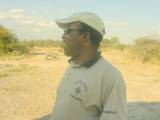
July, August and September is the peak season for mobile safaris. Shylock was back in Maun this weekend. He has travelled much of Botswana, showing his guests the parts of the country he loves best. Much of the time he has been in Moremi Game Reserve and Chobe National Park.
Shylock likes trips of all sizes and durations. For a one day trip, an early start is key. Much of the trip into Moremi is a game drive. Bird lovers do best in the morning and sighting are plentiful. After a good lunch and short rest the guests are ready for a game drive that turns in our return trip. By the time we return ar dusk, enem the big game viewers are happy. From Shylock's perspective, "A guides best friend is an interested guest. They make it happen for everyone on the mobile safari."
Subscribe to:
Posts (Atom)